


Infrared Light Therapy: The Future of Healing and Wellness

Imagine harnessing the power of light to heal your body, enhance recovery, and optimize well-being. Infrared light therapy is gaining momentum in the health and wellness space, with growing scientific backing supporting its benefits. This article explores how infrared and red light therapy work, their key differences, and how INFERA is revolutionizing the field of wellness and recovery.
What is Infrared Light Therapy and How Does It Work?
Infrared light therapy is a non-invasive treatment that uses wavelengths of light beyond the visible spectrum to penetrate deep into the skin, muscles, and even bones. Unlike UV light, which can cause damage, infrared light is gentle and promotes cellular repair and regeneration.
Infrared light falls into three categories:
- Near-infrared (NIR): 700-1400 nm, primarily affecting cells and tissues.
- Mid-infrared (MIR): 1400-3000 nm, providing deeper penetration for muscle relaxation and improved circulation.
- Far-infrared (FIR): 3000-100,000 nm, known for its detoxification and deep heat effects.
Infrared light works by stimulating mitochondria, the powerhouse of the cell, to produce more adenosine triphosphate (ATP), the energy currency of the body. This leads to enhanced cell function, reduced inflammation, and accelerated tissue repair (Hamblin, 2017).
What is Red Light Therapy and How Does It Work?
Red light therapy (RLT) is a form of photobiomodulation (PBM) that uses wavelengths of visible red light (typically 620-700 nm) to penetrate the skin and stimulate cellular activity. Unlike infrared light, red light does not penetrate as deeply but is highly effective for skin health, wound healing, and reducing inflammation at a surface level.
Red light works by activating cytochrome c oxidase, an enzyme in mitochondria that enhances ATP production. This increased energy supports collagen production, accelerates healing, and reduces oxidative stress, making it an excellent therapy for skin rejuvenation and anti-aging (Barolet & Roberge, 2018).
What is the Difference Between Infrared and Red Light Therapy?
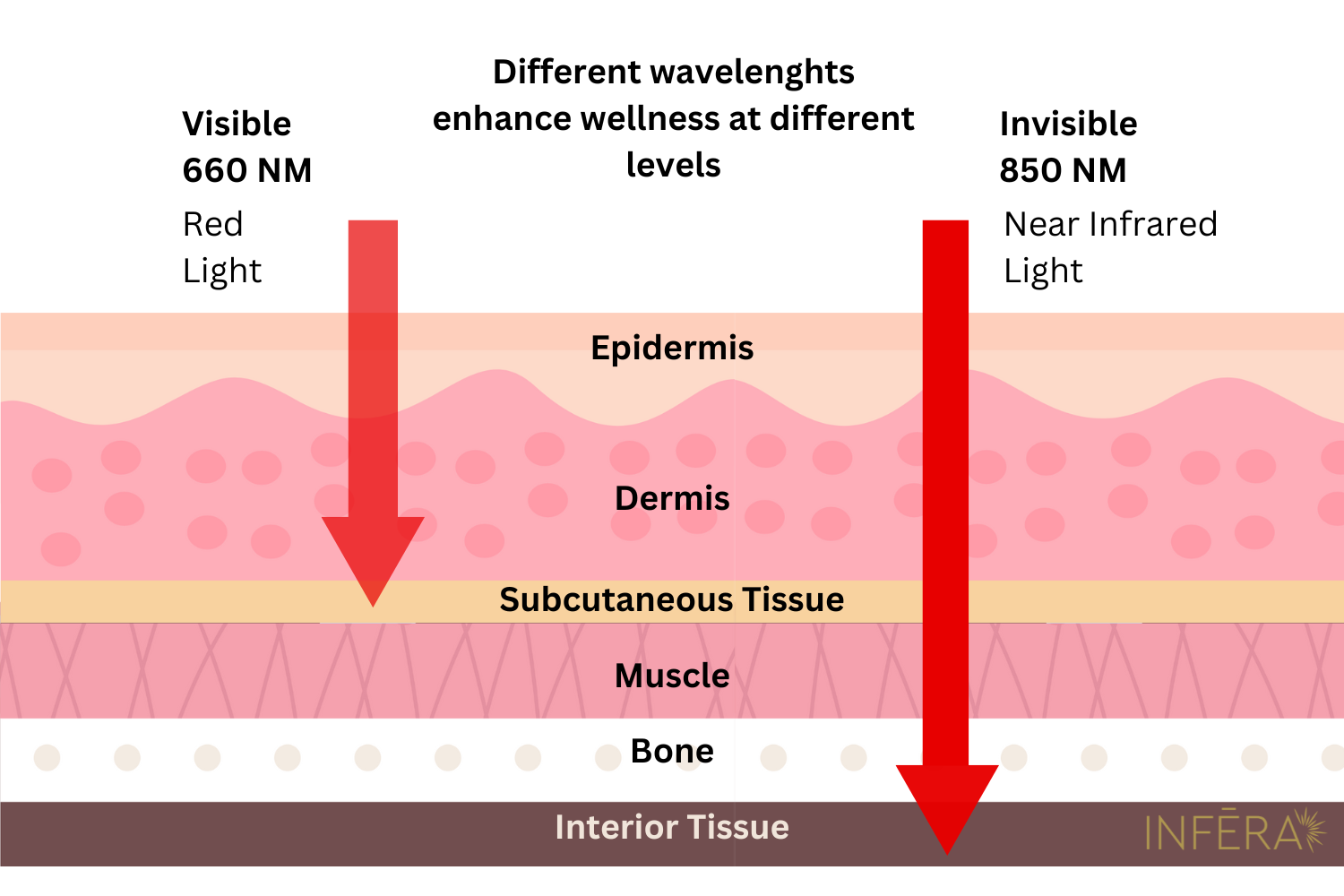
The key differences between red and infrared light therapy lie in their wavelengths and penetration depth:
- Red light therapy: Primarily affects the skin and superficial tissues (up to 10 mm deep), making it effective for skin health, inflammation reduction, and collagen production.
- Infrared light therapy: Penetrates much deeper into muscles, joints, and bones, making it more suitable for pain relief, muscle recovery, and cellular repair.
What are the Benefits of Red and Infrared Light Therapy?
Both therapies provide a wide range of health benefits, including:
- Pain relief: Reduces inflammation and alleviates chronic pain conditions like arthritis and fibromyalgia (Lanzafame et al., 2016).
- Muscle recovery: Enhances blood circulation and reduces muscle fatigue post-exercise (Leal et al., 2019).
- Skin rejuvenation: Boosts collagen production, reduces wrinkles, and improves skin elasticity (Avci et al., 2013).
- Enhanced cognitive function: Infrared light therapy has shown promise in improving brain function and neuroprotection (Naeser et al., 2020).
How Does INFERA Fit In?
INFERA is at the forefront of wellness, offering cutting-edge infrared and red light therapy technology to optimize human health and recovery. INFERA’s advanced light therapy devices use clinically tested wavelengths to promote faster healing, reduce inflammation, and enhance overall well-being. Designed with precision engineering, INFERA’s products incorporate:
- Medical-grade LEDs: Ensuring consistent and effective light delivery.
- Smart Technology: Customizable settings for targeted treatment.
- Ergonomic Design: Making it easy to use at home or in a clinical setting.
INFERA is trusted by wellness professionals, physical therapists, and health-conscious individuals worldwide for its ability to improve circulation, reduce chronic pain, and support long-term vitality. For more information, visit INFERA’s website.
How Does INFERA Work?

INFERA devices utilize a combination of near-infrared and red light wavelengths to deliver targeted therapy with high precision. The technology is designed to penetrate the skin at varying depths, ensuring that both surface-level and deep-tissue areas receive the appropriate light stimulation. INFERA’s smart systems allow users to customize their treatment by adjusting light intensity and duration, providing a personalized experience for a variety of wellness needs. The devices are built with medical-grade LEDs that emit consistent, therapeutic wavelengths, ensuring maximum cellular activation and healing benefits. Whether used for pain management, muscle recovery, skin health, or relaxation, INFERA’s technology is engineered to deliver efficient and effective results. With an easy-to-use interface and portable design, INFERA products are ideal for home use, allowing individuals to integrate light therapy into their daily wellness routine effortlessly. Regular use of INFERA’s technology can lead to significant improvements in circulation, energy levels, inflammation reduction, and overall well-being, making it a powerful tool for anyone looking to enhance their health naturally.
Conclusion
Infrared and red light therapy offer science-backed benefits for healing, recovery, and wellness. Whether you’re looking to reduce pain, rejuvenate your skin, or boost cellular energy, these therapies provide a non-invasive, effective solution. With INFERA’s innovative technology, you can experience the full potential of light therapy and take control of your health and well-being.