

The Best Serums to Use Before Red Light Therapy (And What to Avoid)
Written by Laura Martinez, Content & Education, INFERA | Last updated: May 2026
Apply lightweight, water-based serums containing hyaluronic acid, peptides, or niacinamide before red light therapy. The mild heat from treatment and the photomechanical effects of 625nm light on cell membranes both enhance transdermal absorption, creating a window of increased skin permeability during treatment. Serums to avoid before treatment include retinoids, unstabilised vitamin C, and AHAs or BHAs.
Most people apply skincare the same way before a red light session as they do on any other morning: whatever they normally use, in whatever order they normally use it. The sequence is familiar. The mechanism is different.
Red light therapy at 625nm, particularly when delivered alongside controlled thermal output at approximately 42°C, does not leave the skin in its resting state. It changes the skin's permeability. That change is useful when the right ingredients are present at the skin surface. It creates a problem when the wrong ones are.
The serum question is not about which products are most expensive, or which ingredients are trending. It is about photochemistry: what each ingredient does when exposed to light and heat, and what that means for the skin during treatment.
Why Pre-Treatment Application Is Different From Regular Application
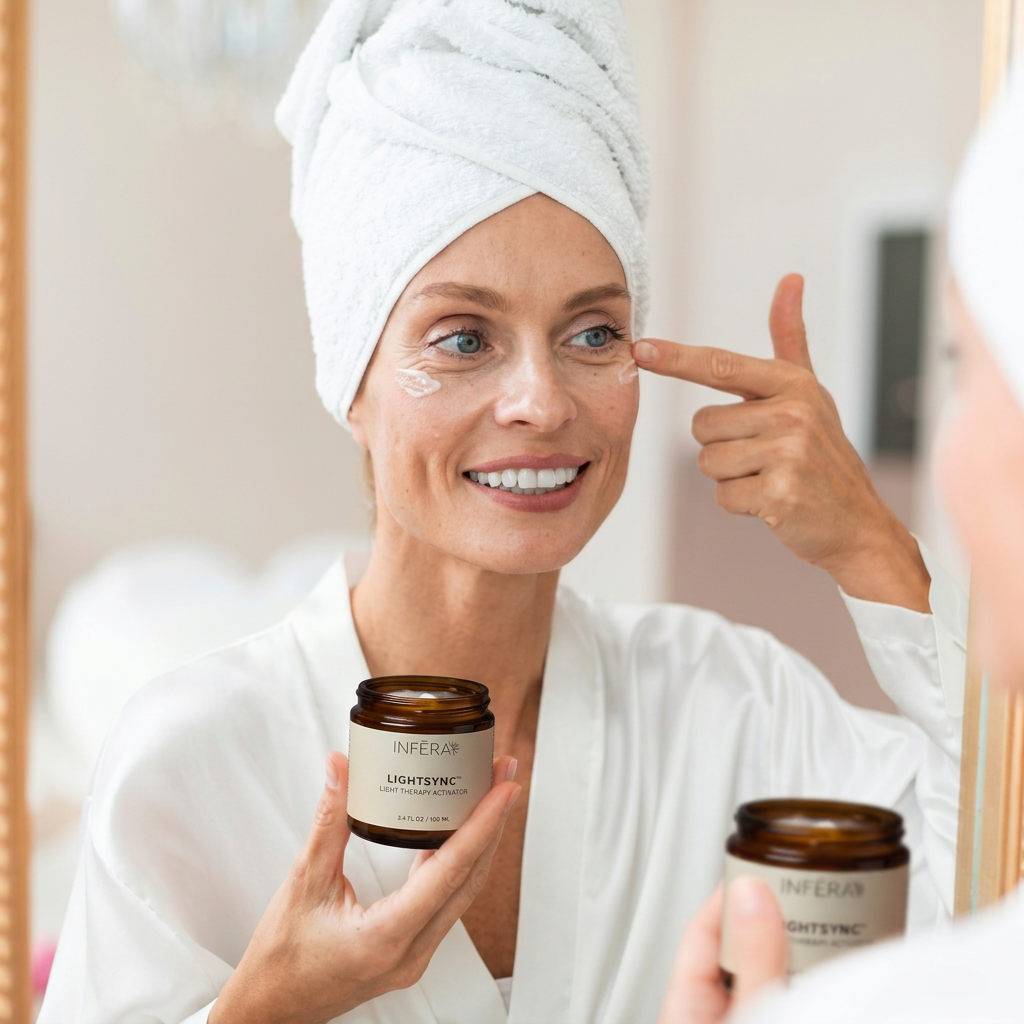
The skin's baseline permeability limits how much of a topical ingredient crosses the stratum corneum, the outermost skin layer, and reaches the viable epidermis and dermis below. Most serums applied under normal conditions saturate the surface layers and proceed into deeper tissue slowly, constrained by molecular weight, charge, and the lipid matrix of the skin barrier.
Two things change during red light therapy with a contact device. First, mild heat at the treatment surface increases tissue permeability. Research published in the NIH National Library of Medicine (PMC2464624) documents that heat in the range of 40–42°C increases skin permeability by increasing lipid membrane fluidity in the stratum corneum, allowing larger and more polar molecules to cross the barrier more readily. Second, photomechanical effects from 625nm light on cell membranes create transient pore-like openings at the cellular level, a mechanism documented in low-level light therapy literature (PMC3926176).
The result is a brief window, roughly the duration of a contact treatment session, when the skin is measurably more permeable than baseline. Ingredients present at the surface during this window reach target tissue at greater concentrations than the same ingredient applied at any other point in the routine.
This is why pre-treatment serum selection matters. The enhanced absorption mechanism works on whatever is at the skin surface. The goal is to use it deliberately.
Compatible Serums: What Works and Why
The serums that work well before red light therapy share two characteristics: low molecular weight (which allows efficient penetration even at baseline, and even more so under conditions of elevated permeability) and photostability (they do not degrade, oxidise, or produce reactive species when exposed to red wavelengths or mild heat).
-
Hyaluronic acid
Is the most broadly compatible option. Molecular weights vary between formulations: low-molecular-weight hyaluronic acid (under 50kDa) penetrates to the dermis under standard conditions; high-molecular-weight variants (over 1,000kDa) work primarily at the surface layer. Both are photostable, non-sensitising, and thermally stable at 42°C. Applied before treatment, low-molecular-weight hyaluronic acid reaches dermal fibroblasts during the permeability window, supporting hydration at the level where it affects structural skin function.
-
Peptide serums
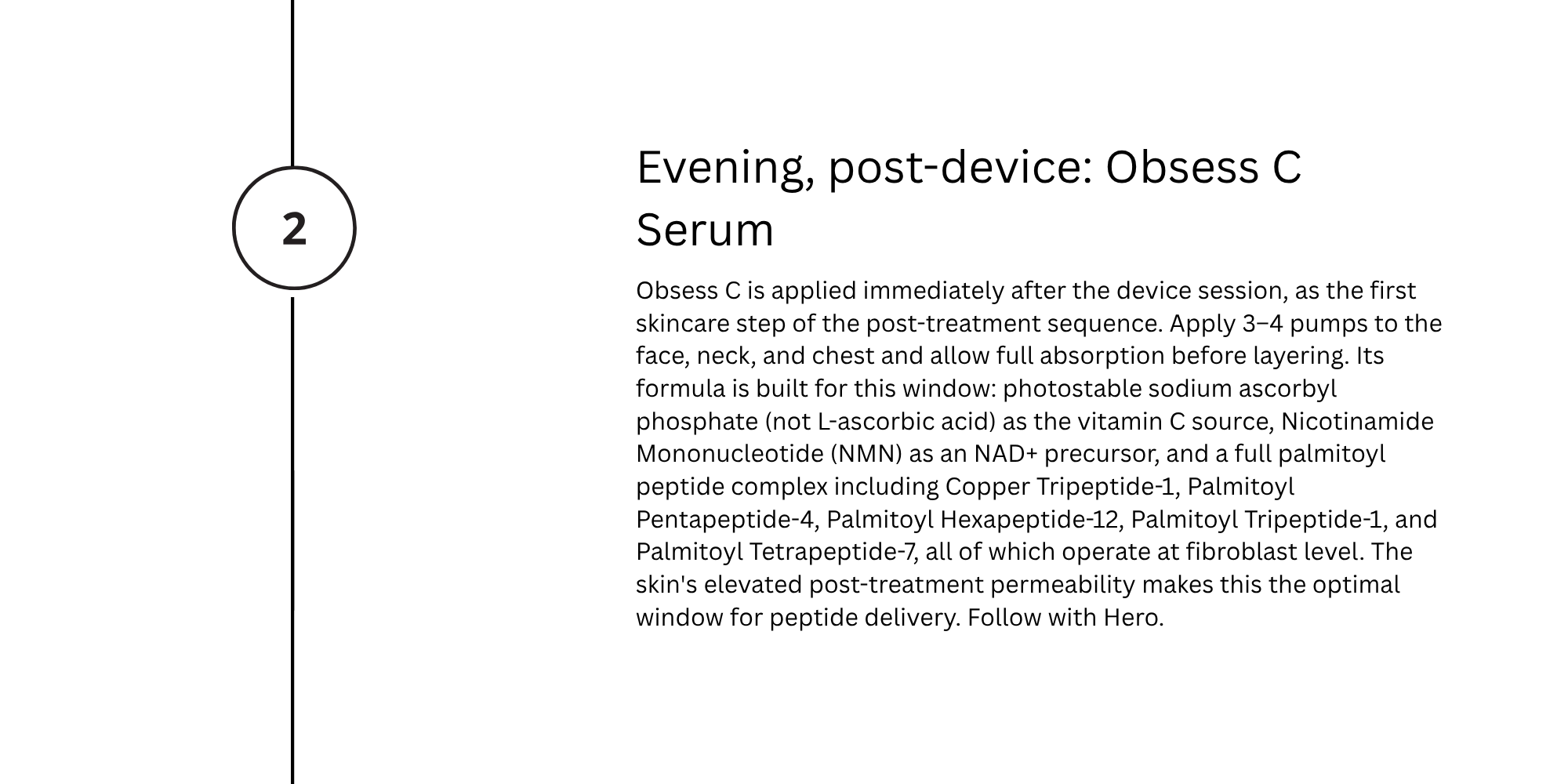
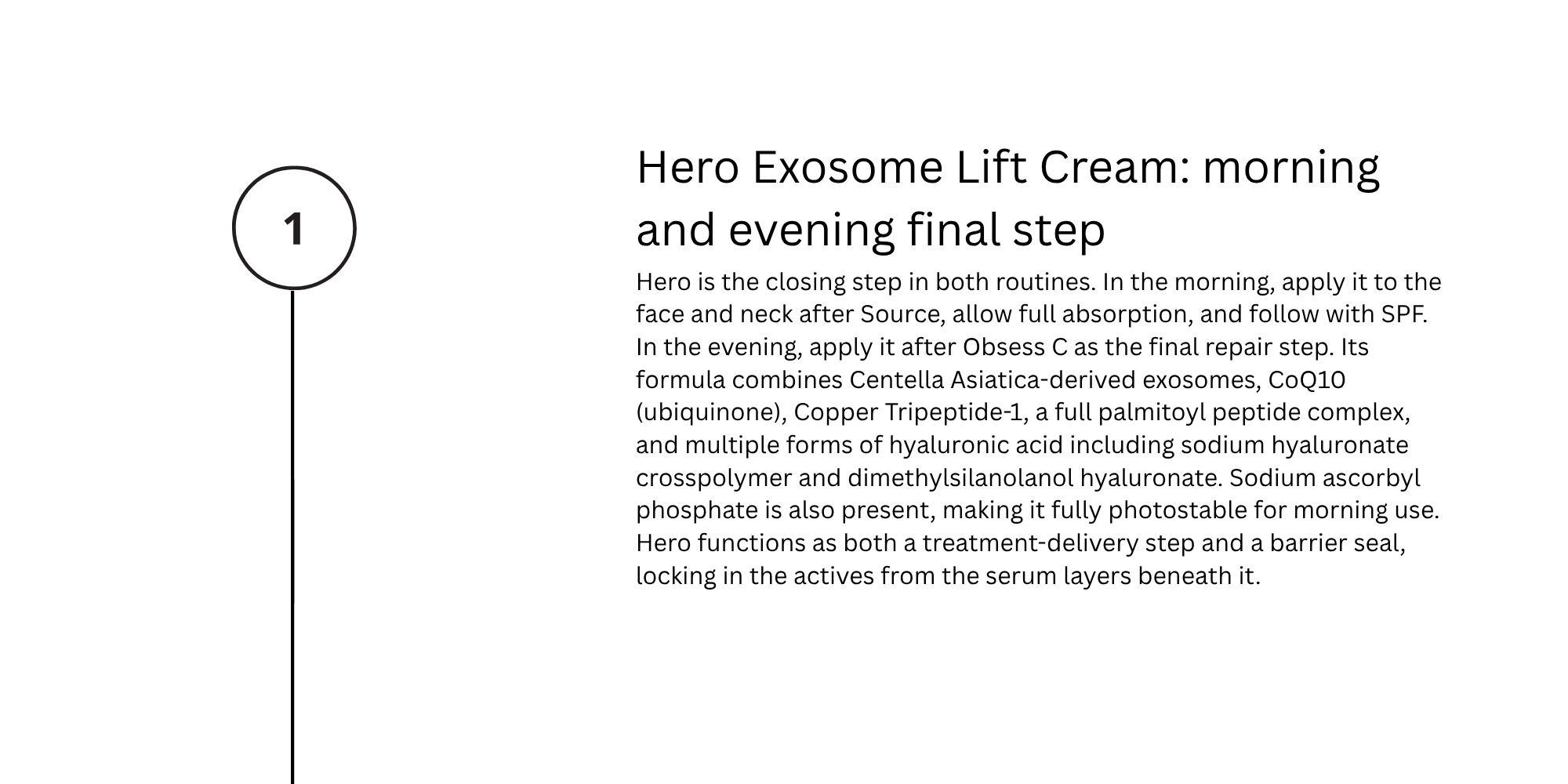
Are well-suited to pre-treatment application for the same reasons. Signal peptides such as palmitoyl pentapeptide-4 (Matrixyl) and copper peptides (GHK-Cu) have molecular weights in the range of 500–2,000 Da, which places them in the range of effective percutaneous penetration. Research on copper peptide delivery documents wound healing and collagen stimulation effects that operate at fibroblast level (PMC3936867). Pre-treatment application during a photobiomodulation session that is itself activating fibroblasts via cytochrome c oxidase creates a compounding effect: the device stimulates cellular activity, and the peptide provides substrate for that activity. INFERA's Obsess C serum contains Copper Tripeptide-1 alongside a full palmitoyl peptide complex, including Palmitoyl Pentapeptide-4, Palmitoyl Hexapeptide-12, and Palmitoyl Tripeptide-1, making it one of the most peptide-dense options for pre-treatment delivery in this format.
-
Niacinamide(vitamin B3)
Is thermally stable, photostable, and water-soluble, making it a straightforward pre-treatment option. At concentrations of 2–5%, niacinamide has documented effects on ceramide synthesis, melanin transfer inhibition, and skin barrier integrity (PMC3997071). Unlike ascorbic acid (vitamin C in its unstabilised form), niacinamide does not oxidise on light exposure. It is the more appropriate vitamin-family ingredient for use during red light therapy. Obsess C includes niacinamide alongside its peptide complex, covering both mechanisms in a single pre-treatment step.
The INFERA Protocol: What to Use and When
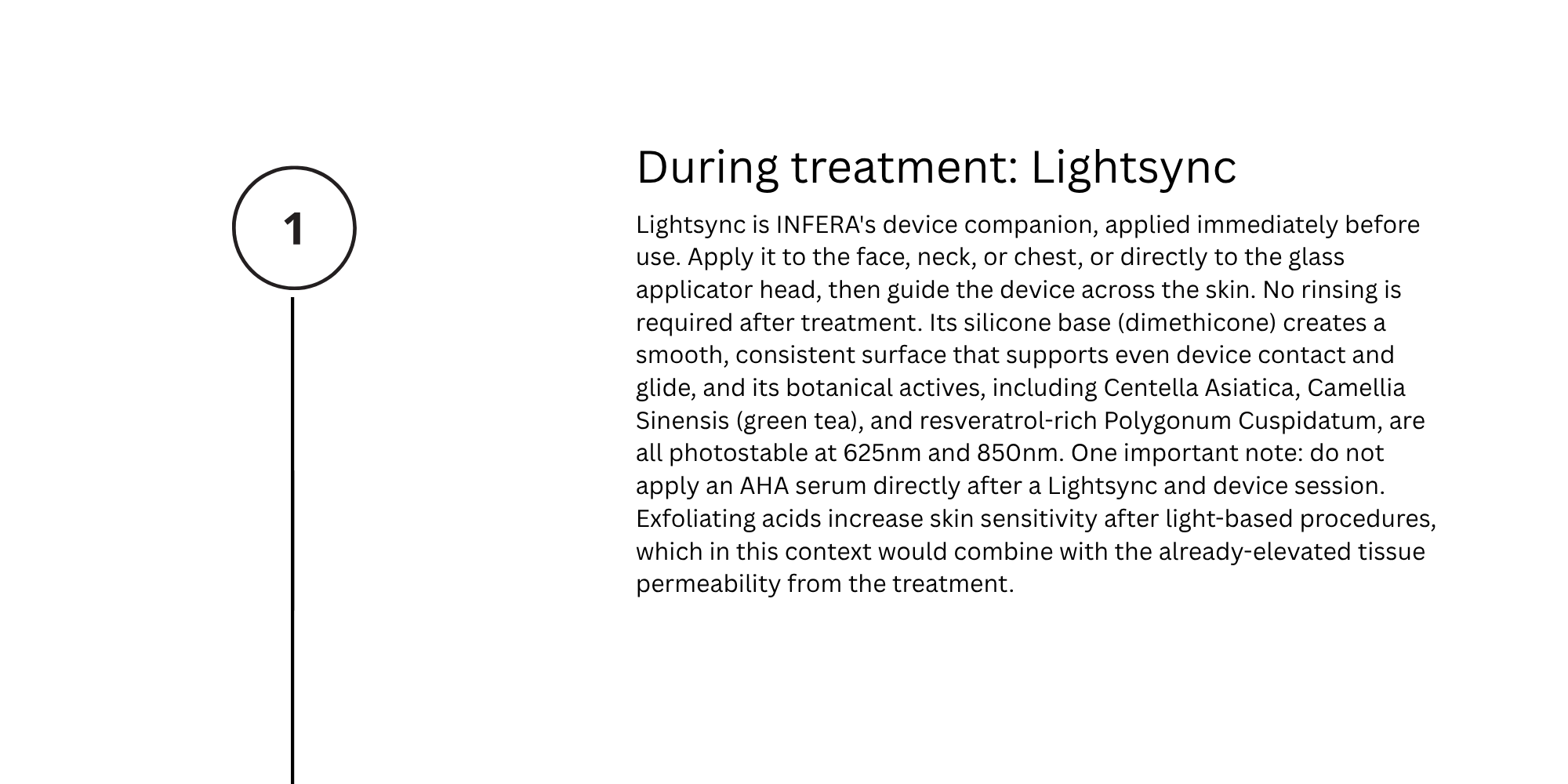
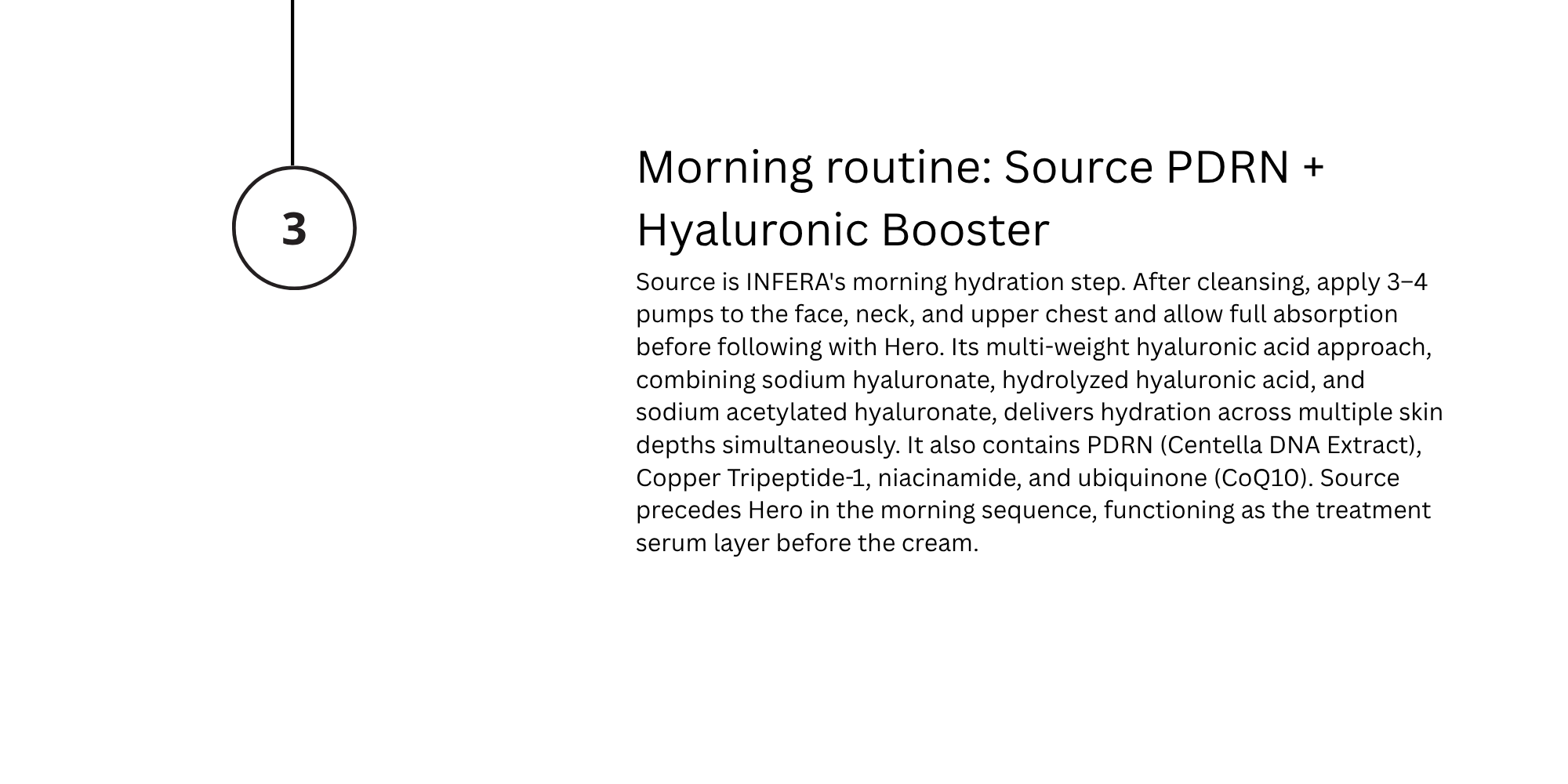
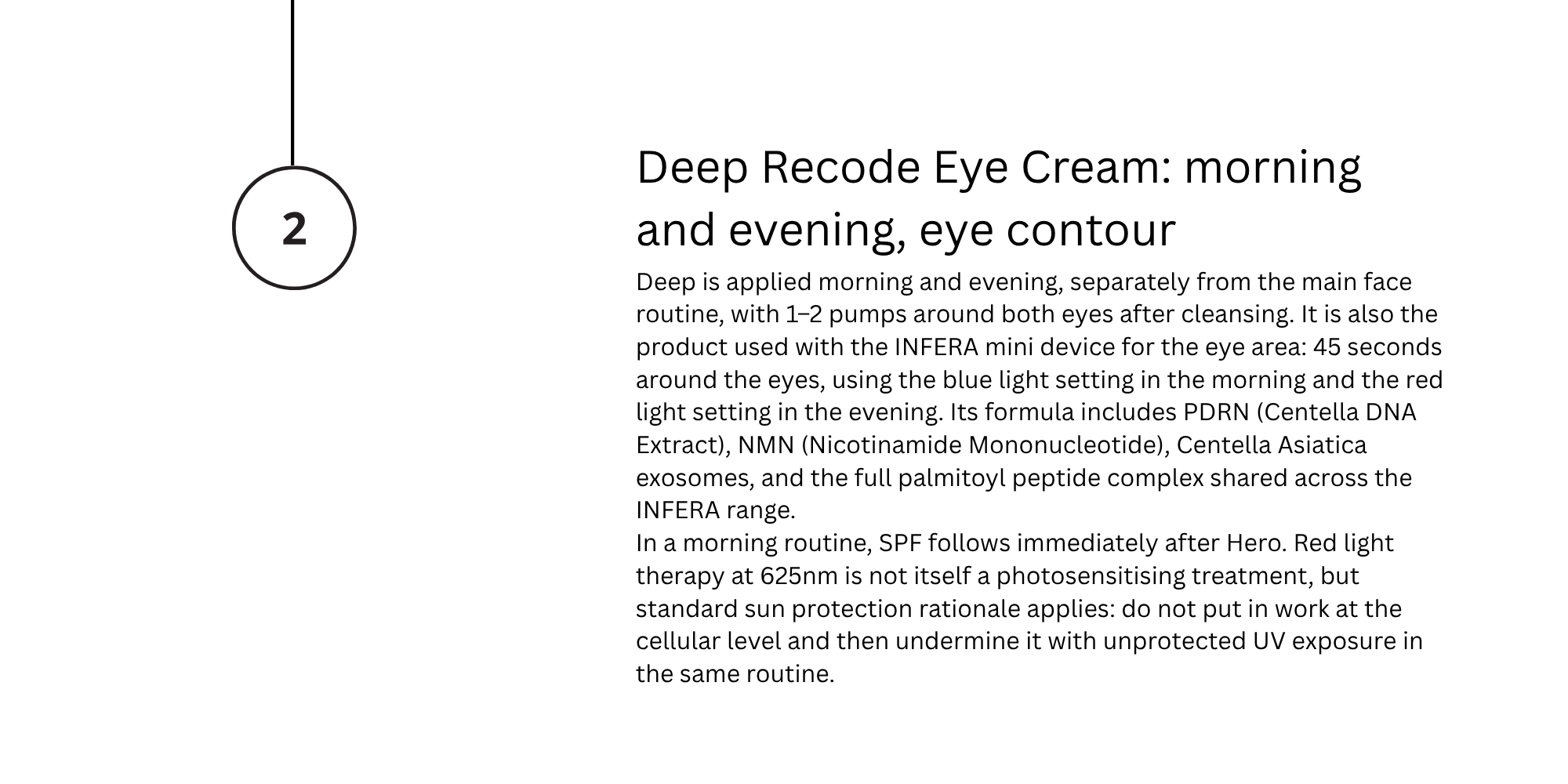
INFERA's skincare range is developed in South Korea and formulated specifically around compatibility with red light therapy. Each product sits at a defined point in the treatment sequence. The morning and evening routines are structured differently, and the device session itself has a dedicated product.
What to Avoid Before Red Light Therapy: The Chemistry
Some of the most commonly used skincare actives have significant problems when applied before red light therapy. The issues are chemical, not precautionary.
Retinoids (retinol, retinal, tretinoin): Retinoids are photosensitising. On exposure to ultraviolet light, retinol degrades via oxidation to retinyl hydroperoxide, a pro-oxidant species. While red light at 625nm is not UV radiation and does not drive the same photodegradation pathway, retinoids increase the skin's overall photosensitivity and temporarily compromise the skin barrier. This increases the risk of irritation during a treatment session, particularly when heat is also applied. Retinoids should be used in the evening routine, at least 30 minutes after treatment, not in the pre-treatment application window.
Ascorbic acid (unstabilised vitamin C): L-ascorbic acid is inherently unstable and oxidises readily on exposure to light and heat. At the skin surface, the oxidation product of ascorbic acid is dehydroascorbic acid and then diketogulonic acid, both of which are pro-inflammatory at higher concentrations. The distinction matters: stabilised vitamin C derivatives such as sodium ascorbyl phosphate are thermally and photostable and can be used both before and after a device session without this risk. This is why INFERA's Obsess C serum uses sodium ascorbyl phosphate rather than L-ascorbic acid — it is compatible at either point in the treatment sequence. Unstabilised L-ascorbic acid formulations are the ones to avoid in the same session as red light therapy.
AHAs and BHAs (glycolic acid, lactic acid, salicylic acid): Alpha and beta hydroxy acids exfoliate by breaking the bonds between corneocytes in the stratum corneum, which increases the skin's light and chemical sensitivity. Applying AHAs or BHAs before red light therapy increases photosensitivity and, under conditions of elevated thermal permeability, accelerates penetration of these acids into deeper tissue layers than intended. The result is a higher risk of irritation, redness, and barrier disruption. These actives should be used in the evening, not the pre-treatment window.
Heavy facial oils and thick occlusives: Not chemically problematic in the same way, but a practical issue. Thick oils and occlusive balms form a barrier on the skin surface that reflects light and prevents the glass applicator from making consistent contact. They should be applied post-treatment, not before.
Post-Treatment Application: What to Apply After
The permeability window created by treatment closes gradually as the skin returns to resting temperature, over approximately 10–20 minutes after a session. This post-treatment period is the appropriate time for richer, heavier formulations that are not well-suited to pre-treatment use.
Heavier moisturisers containing ceramides and fatty acids support barrier restoration after treatment and seal the active ingredients delivered during the session. Research on ceramide-dominant emollients documents their role in stratum corneum lipid matrix repair (PMC3685969). Applying a richer formula in the immediate post-treatment window supports both the protective and reparative effects of a well-structured routine.
Frequently Asked Questions
Yes. Hyaluronic acid is one of the most compatible serums for pre-treatment application. It is photostable, thermally stable at 42°C, and non-irritating. Low-molecular-weight formulations (under 50kDa) reach the dermis efficiently, particularly during the elevated skin permeability window that occurs during contact red light therapy. Apply to clean, dry skin before treatment and allow it to absorb before placing the device at the skin surface.
Yes, if the vitamin C is in a stabilised form. Unstabilised L-ascorbic acid oxidises on exposure to light and heat, producing pro-inflammatory byproducts, and should not be used in the same session as red light therapy. Stabilised derivatives such as sodium ascorbyl phosphate are thermally and photostable and can be applied both before and after a device session without this risk. INFERA's Obsess C serum uses sodium ascorbyl phosphate specifically for this reason: the stabilised form is compatible at either point in the treatment sequence, before or after device use.
For water-based serums containing hyaluronic acid, peptides, or niacinamide: before treatment. The combination of photomechanical and thermal effects during treatment enhances transdermal absorption, so the pre-treatment window is when these ingredients reach their deepest and most concentrated delivery. For heavier creams, oils, and occlusives: after treatment. These are best applied in the 10–20 minutes after a session while the skin remains in a slightly elevated permeability state.
Retinoids increase skin photosensitivity and, when applied before heat and light treatment, raise the risk of irritation, redness, and barrier disruption. Retinol is also less stable under heat and light exposure than under standard application conditions. The risk is not severe, but the combination is counterproductive: retinoids and red light therapy address overlapping goals via different pathways, and they are best scheduled separately. Use retinoids in the evening, at least 30 minutes after any red light session has concluded.
There is no mandatory waiting period. The post-treatment window is actually a useful application window: the skin remains in a slightly elevated permeability state for approximately 10–20 minutes after a session. Applying heavier moisturisers and barrier-support ingredients immediately after treatment is appropriate and beneficial. The elevated permeability fades as the skin returns to resting temperature. SPF should be applied as the final step in any morning routine regardless of whether red light therapy preceded it.
The Sequence Is the Treatment
Red light therapy does not work in isolation from the rest of a skincare routine. The permeability window created by thermal-assisted photobiomodulation is a delivery mechanism as much as it is a treatment. Using it well means selecting the right ingredients, applying them at the right point in the sequence, and reserving actives that are not compatible with heat and light for a separate application window.
For a complete guide to building a routine around the INFERA device, including morning and evening protocols, read How to Use Skincare With Red Light Therapy: The Complete Protocol. For the science behind how INFERA's glass applicator head creates the conditions for this kind of serum delivery, read The INFERA Glass Head: Engineering Choices Explained.
Sources
1. Choi EH et al. The effect of heat on skin permeability. NIH National Library of Medicine. PMC2464624
2. Avci P et al. Low-level laser (light) therapy (LLLT) in skin: stimulating, healing, restoring. Seminars in Cutaneous Medicine and Surgery, 2013. PMC3926176
3. Pickart L, Vasquez-Soltero JM, Margolina A. GHK-Cu and its role in skin remodelling. Journal of Aging Research, 2012. PMC3936867
4. Gehring W. Nicotinic acid/niacinamide and the skin. Journal of Cosmetic Dermatology, 2004. PMC3997071
5. Draelos ZD et al. The effect of ceramide-containing skin care products on eczema resolution duration. Cutis, 2019. PMC3685969